
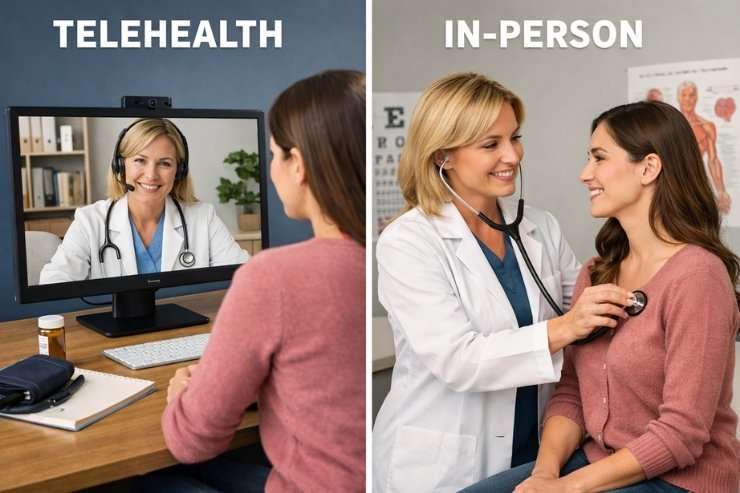
Telehealth means medical care delivered through secure video or phone visits rather than face-to-face appointments. In women's health, this approach covers consultations, follow-ups, patient education, and treatment planning that don't require a physical examination. Online providers commonly manage menopause symptoms, hormone therapy discussions, birth control guidance, medication adjustments, and preventive planning, emphasizing symptom review and collaborative decision-making over hands-on evaluation.
What Women's Health Concerns Can Be Treated Online?
Many conditions are well suited to virtual visits: menopause and perimenopause management, hormonal symptom follow-ups, medication adjustments, and preventive counseling. These appointments support ongoing management and care coordination while reducing how often you need to come into the office.
Menopause care via telehealth includes symptom evaluation, health history review, and discussion of treatment options, along with follow-ups. Individualized hormone therapy decisions may still require coordinating lab work or an in-person appointment when clinically necessary. Virtual visits also effectively support ongoing hormonal symptom management and medication changes while maintaining continuity and scheduling flexibility. Preventive counseling can address screening schedules and personalized planning aligned with your age and medical history.
What Requires an In-Person Women's Health Visit?
Some services can only be done in person in Illinois. Pap smears and pelvic exams involve physical assessment and specimen collection that cannot be conducted virtually. Clinical breast examinations and imaging coordination, including mammography referrals, require office visits or a referral to an imaging facility. STD testing often needs in-person evaluation for accuracy, and acute symptoms such as severe pelvic pain, heavy bleeding, or concerning infections demand hands-on clinical assessment.
Telehealth vs In-Person Care: Key Differences
Virtual appointments offer convenience, reduced travel time, and easier follow-up access, and affordable self-pay options can lower financial barriers. In-person consultations, by contrast, enable comprehensive physical examinations and immediate testing, whereas telehealth relies on discussion and visual observation alone. Both use secure platforms that protect privacy and confidentiality to standards comparable with office-based care.
Is Telehealth Safe and Effective for Women's Health?
Telehealth effectively manages consultations, medication oversight, patient education, and follow-up care when a physical examination isn't required. It cannot replace exams, procedures, or laboratory testing, so clinicians make appropriate referrals when in-person evaluation becomes necessary for safe, evidence-based care.
Telehealth Regulations in Illinois
Illinois permits telemedicine across many services, including women's health, when licensed clinicians provide the care and patients remain within the state during the consultation. Practitioners must hold Illinois licensure to deliver telehealth to in-state patients. Medications can generally be prescribed through telehealth when clinically appropriate, though certain medication categories carry limitations based on medical guidelines and regulations.
How Sina Medical Direct Primary Care Offers Telehealth and In-Person Services
Sina Medical Direct Primary Care operates as a Direct Primary Care clinic offering both telehealth and in-person women's health services throughout Illinois. Care plans use shared decision-making: telehealth handles initial discussions and follow-ups, while in-person visits happen when examinations or testing are needed. Patients transition smoothly between virtual and office appointments, ensuring concerns receive appropriate attention and referrals are coordinated efficiently.
How to Decide Between Telehealth and In-Person Visits
Start by identifying whether your concern requires a physical exam, testing, or a procedure. If it doesn't, telehealth may be an appropriate starting point. Your provider can confirm whether telehealth is suitable or recommend an in-person evaluation based on safety and effectiveness.
Frequently Asked Questions
Yes, many women's health concerns can be treated through telehealth in Illinois, though certain services remain in-person only. Virtual visits commonly address menopause management, birth control counseling, medication follow-ups, and preventive guidance, while pelvic exams, Pap testing, STD testing, imaging coordination, and specific acute symptoms require an office visit. Insurance coverage varies by plan, so verify telehealth benefits with your insurer, as some visits may be self-pay.
Conclusion
Whether you need an in-person evaluation depends on your particular health concern. Telehealth provides safe, effective access for many women's health needs in Illinois, while in-person visits remain essential for examinations and testing. Combining both approaches supports comprehensive, evidence-informed care.
Have questions about women’s health?
Talk directly with Dr. Ali — no copays, no waiting rooms, just physician-led care built around you.