
Depression Care
Depression Treatment
Physician-led depression care for adults across Illinois, treating the whole person with a doctor who has the time to understand what you are going through.
Depression does not always look like sadness. Sometimes it is a heaviness that will not lift, a loss of interest in things you used to enjoy, or the sense that you are just going through the motions. Sometimes it shows up as exhaustion, poor sleep, trouble concentrating, or a short temper, while you keep functioning on the outside and quietly struggle underneath.
Many people live with it far longer than they should. They assume they are just tired, stressed, or not trying hard enough, or they have been told to think positive and push through. Meanwhile the days keep feeling gray.
- Same-Day & Next-Day Visits
- No Copays, No Insurance Hassle
- Triple Board-Certified Physician

At Sina Medical Direct Primary Care, depression is treated as the real and highly treatable medical condition it is. Under the care of Dr. Ali, you get unhurried visits, a careful look at what is driving how you feel, and a plan built around you rather than a rushed prescription. You are not failing, and you are not alone in this. Depression responds to the right care.
A lack of estrogen can leave women in perimenopause feeling joyless and depressed. Instead of treating these patients with traditional, reactionary antidepressants, Dr. Ali evaluates them for other symptoms of menopause. By treating the hormone imbalance—which is often the true root cause of the illness—patients don't just feel happier and more joyful; it also improves their irritability, feelings of being unloved, joint pains, muscle aches, and insomnia.
There are more than 20 different symptoms that women often unknowingly dismiss, fearing they will be ridiculed if they mention them all. However, after 6 to 9 months of treatment, when they finally feel like the exact same women they were 10 years ago, they are filled with an unexpressable amount of joy. Witnessing that transformation is incredibly rewarding for a physician.
Why Depression So Often Goes Unrecognized
Depression is common and very treatable, yet it frequently goes unnamed and untreated for years. Several things stand in the way.
It often builds slowly. There is rarely one dramatic moment, just a gradual fading of energy, interest, and motivation, until feeling low starts to seem normal. By the time many people think about getting help, they can barely remember feeling any other way.
It also hides behind physical symptoms. Fatigue, changes in sleep and appetite, unexplained aches, and difficulty concentrating send people to the doctor for everything except the depression beneath them. And certain medical issues, such as thyroid problems or vitamin deficiencies, can cause similar symptoms, which makes a careful evaluation important.
Then there is the stigma and the system. People worry about being judged or about being a burden. Real help can mean long therapy waitlists and months-long waits for psychiatry, with a rushed primary care visit in between that never reaches the heart of it.
The result is a treatable condition left to run quietly in the background. It does not have to be that way.
What Depression Actually Is
Depression is more than a low mood or a hard week. It is a medical condition that affects how you feel, think, sleep, eat, and function, often for weeks or months at a time.
It is not weakness, laziness, or a lack of gratitude. It involves real changes in the brain and body, which is why willpower alone does not fix it and why it can produce such physical effects. Telling someone with depression to simply cheer up is a bit like telling someone with asthma to simply breathe better.
Depression also connects closely to physical health. It can be triggered or worsened by thyroid disorders, nutritional deficiencies, chronic illness, certain medications, poor sleep, and ongoing stress. That is why a physician is well placed to help, because good care looks for those contributors and treats the depression itself.
Most importantly, depression is highly treatable. With the right support, the large majority of people improve, often a great deal.
Meet Your Physician
Dr. Ali's Approach to Depression Care
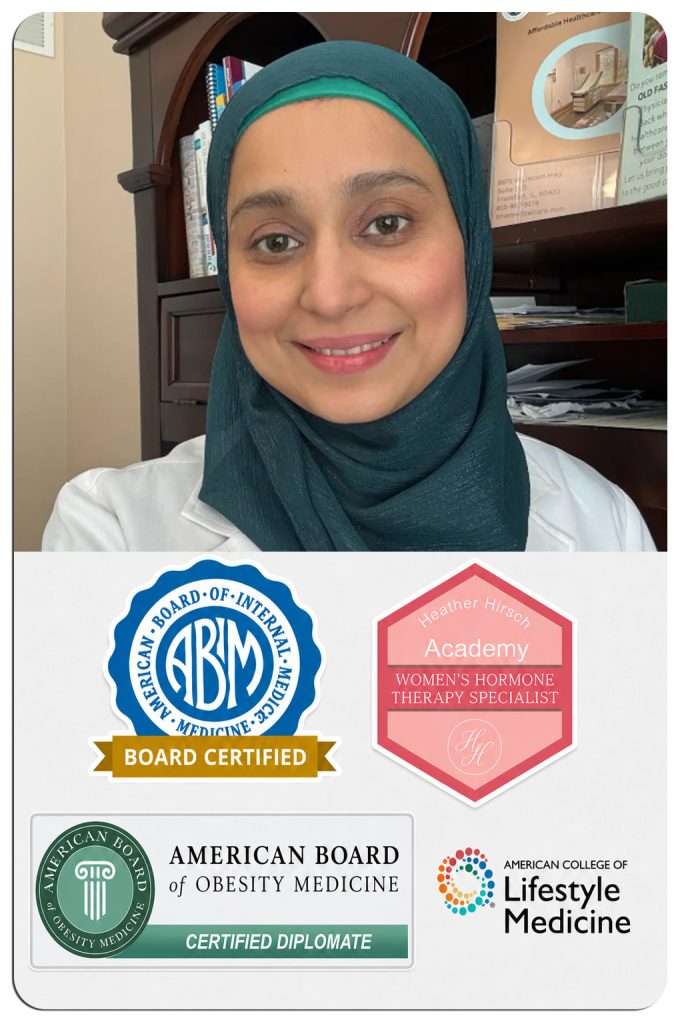
Dr. Ali is a triple board-certified physician in Internal Medicine, Obesity Medicine, and Lifestyle Medicine. Depression is one of the most common conditions managed in primary care, and her approach treats both its emotional and physical sides, with the time to do it right.
Her depression care includes:
Unhurried visits that take how you feel seriously
An evaluation that checks for physical contributors such as thyroid issues and deficiencies
Evidence-based treatment, including medication when it is appropriate
Lifestyle support, covering sleep, activity, and nutrition, that meaningfully affects mood
Coordination with therapists and psychiatry when talk-based or specialized care is the right fit
Regular follow-up, since depression treatment works best when it is monitored and adjusted
The Forms of Depression We Help With
Depression shows up in different ways, and we help with the range adults commonly experience.
How Our Depression Care Works
A real conversation
We begin with an unhurried visit to understand how you have been feeling, how long it has lasted, and how it is affecting your life, without rushing or judgment.
A thorough evaluation
Your physician reviews your symptoms and history and checks for physical contributors, so depression is treated accurately and nothing medical is overlooked.
A plan that fits you
Together we build an approach that may include lifestyle support, medication when appropriate, and a referral to therapy, shaped by your preferences and by how depression is affecting you.
Ongoing support
Depression care is not a single visit. We follow up closely, see how you are responding, and adjust the plan over time, with direct access to your physician when you need it.
What You Can Expect
The goal is not a forced smile. It is to help you feel like yourself again, and to keep you well.
If You Are in Crisis
If you are thinking about harming yourself or are in emotional crisis, please reach out for help right now. In the United States, you can call or text 988 to reach the Suicide and Crisis Lifeline, available 24 hours a day. If you are in immediate danger, call 911 or go to your nearest emergency room. You deserve support, and you do not have to face this alone.
Frequently Asked Questions
Can a primary care doctor really treat depression?
Yes. Depression is one of the most common conditions managed in primary care. A physician can diagnose it, check for physical causes, begin evidence-based treatment, and coordinate therapy or psychiatry when more specialized care is helpful.
Will I have to take medication?
Not necessarily. Medication helps many people, but it is one option among several. Therapy and lifestyle support are effective too, and any plan is built around your preferences.
How do I know if it's depression or something physical?
That is part of what an evaluation determines. Because conditions like thyroid problems and vitamin deficiencies can cause similar symptoms, your physician checks for them while assessing the depression itself.
Is depression actually treatable?
Yes, and very effectively. With the right plan, the large majority of people with depression improve, and many recover fully.
What if I have tried treatment before and it didn't work?
That is more common than people think, and it is worth another look. Sometimes the dose, the type of treatment, or an overlooked physical contributor was the issue. A fresh, thorough evaluation often opens up options that were not tried before.
Do you offer therapy?
Our physician provides medical evaluation and treatment for depression and coordinates talk therapy with qualified therapists when it is part of your plan, so the pieces of your care work together.
Can I be seen virtually?
Yes. Depression care works well by telemedicine, and our virtual visits are available across Illinois, from wherever you feel comfortable.
Do I need insurance to be seen?
No. Our Direct Primary Care model does not require insurance, and depression care is included in your membership with no separate per-visit fee.
Take the First Step
You do not have to keep pushing through this on your own, and you do not have to wait months to be heard. The first step is a real conversation with a physician who has the time to understand and help.
Start physician-led depression care built around your life, your health, and what works for you.
Medically Reviewed by Dr. Syeda Farheen Ali, MD Triple Board-Certified Physician in Internal Medicine, Obesity Medicine, and Lifestyle Medicine Last updated: July 2026
The Problem
Why the Traditional System Fails Patients
What an ER or urgent care bills for issues we treat the same day
The average appointment in traditional, insurance-driven care
Of patients delay or skip care over cost, wait times, or access
A flat Sina membership — everything included, no copays, no surprise bills
What's Covered
Everything Included In Your Membership
One flat monthly membership covers comprehensive care across every category below — with no copays, no hidden fees, and direct access to Dr. Ali.
- Unlimited same-day and next-day visits
- Telehealth across Illinois
- Direct text and call access to Dr. Ali
- Annual physicals and preventive care
- Acute and urgent care (flu, UTI, strep, rash, ear infections)
- Chronic disease management (diabetes, hypertension, thyroid, COPD, sleep apnea)
- Women's health: HRT, menopause care, Pap smears, breast exams
- Men's health: testosterone, preventive care, cardiovascular health
- GLP-1 prescriptions (Semaglutide, Tirzepatide)
- Medical weight loss management
- Labs at wholesale cost (70 to 90 percent off retail)
- Generic medications at cost
- Specialist referral coordination
- Sick Visits
- Cold, Flu & Viral Illness Treatment
- Sore Throat & Strep Testing
- Sinus Infections
- Pneumonia Evaluation & Treatment
- Urinary Tract Infection (UTI) Treatment
- STI Testing & Sexual Health Screening
- Skin Rashes & Minor Skin Conditions
- Minor Lacerations & Wound Care
- Suture/staple Removal
- Muscle Strains & Sprains
- Joint Pain Evaluation
- Ear Wax Removal
- Return-to-Work Clearance Visits
- Stomach Flu & Digestive Illnesses
- Well-Woman Exams, Pap Smear
- Menopause & Perimenopause Care
- Hormone Replacement Therapy (HRT)
- Bioidentical Hormone Therapy (BHRT)
- Pap Smears & Cervical Cancer Screening
- Insulin Resistance & Metabolic Health Support
- Thyroid Hormone Optimization
- Fatigue & Hormonal Imbalance Treatment
- Weight Loss for Women
- Preventive Women's Health Care
- Men's Preventive Care
- Testosterone Replacement Therapy (TRT)
- Hormone Optimization for Men
- Men's Weight Loss Programs
- Andropause / Male Menopause Support
- Metabolic Health & Energy Optimization
- Physician-Guided Weight Loss Programs
- GLP Therapy (Semaglutide / Tirzepatide)
- Personalized Nutrition Counseling
- Exercise & Lifestyle Planning
- Metabolic Syndrome Management
- Insulin Resistance & Prediabetes
- Ongoing Progress Monitoring
- Bariatric Surgery Referrals When Appropriate
- Diabetes & Prediabetes
- High Blood Pressure (Hypertension)
- High Cholesterol (Dyslipidemia)
- Thyroid Disorders
- Asthma & COPD
- Coronary Artery Disease
- Congestive Heart Failure
- Sleep Apnea
- Fatty Liver Disease & IBS
- Osteoarthritis & Osteoporosis
- Heartburn & Acid Reflux
- Atrial Fibrillation
- Lifestyle Medicine Counseling
- Sustainable Habit Development
- Disease Prevention & Risk Reduction
- Long-Term Wellness Planning
- Nutrition & Exercise Coaching
- Functional & Root-Cause Focused
- Stress & Sleep Optimization
Healthcare as It Should Be — Personalized, Accessible, Affordable
Join Sina Medical Direct Primary Care and experience healthcare that's personal, preventive, and truly built around you — not the insurance system.