
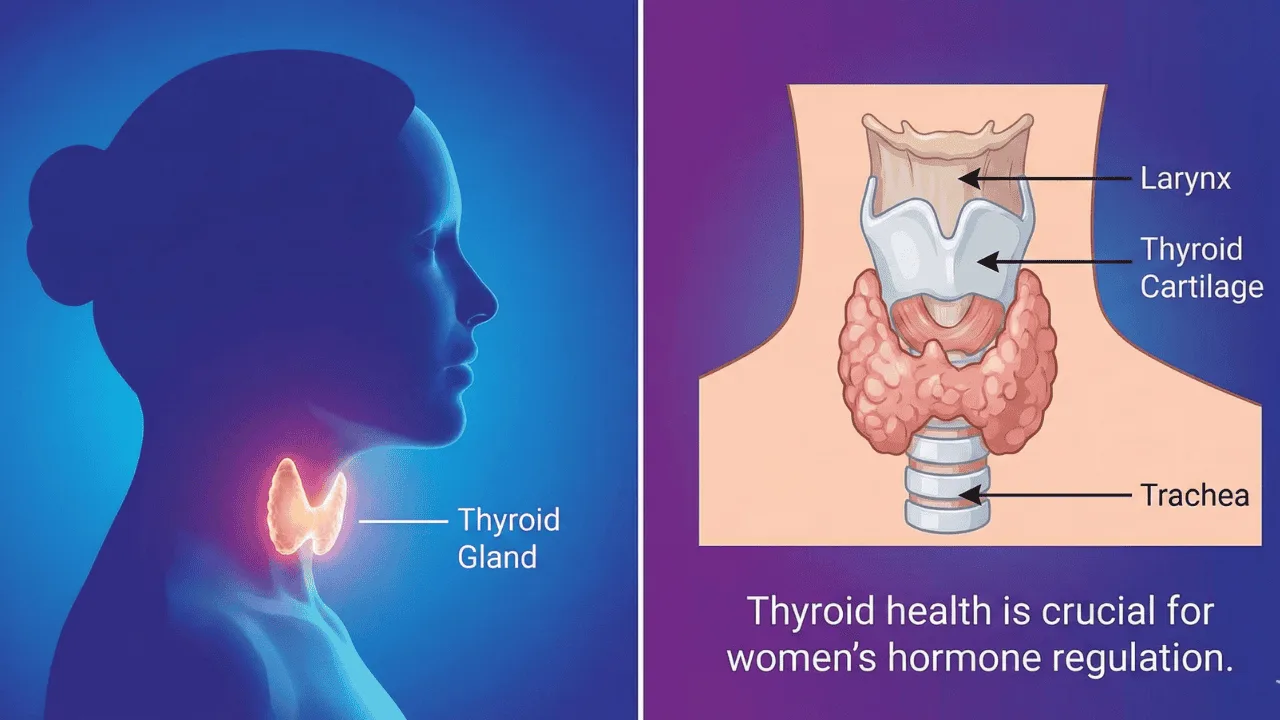
The thyroid is a small, butterfly-shaped gland at the front of the neck that produces hormones controlling metabolism, heart rate, body temperature, and energy. Even slight deviations from normal hormone levels can trigger noticeable physical and emotional symptoms. Thyroid health matters especially for women because thyroid hormones interact closely with estrogen and progesterone, affecting menstrual cycles, fertility, pregnancy, and menopause. That interconnection is exactly why thyroid disorders in women are so often underdiagnosed or caught late.
Thyroid Problems in Women: An Overview
Thyroid disorders develop when the gland produces too little or too much hormone. Hypothyroidism, the most common, slows the body and causes fatigue, weight gain, cold sensitivity, dry skin, hair thinning, and mood or memory changes. Hyperthyroidism speeds the body up, causing weight loss, rapid heartbeat, anxiety, heat intolerance, and sleep disturbances. Women are affected far more often than men due to hormonal, immune, and genetic factors, and symptoms frequently surface during life transitions such as after childbirth, in perimenopause, and during menopause.
Common Thyroid Symptoms in Women
Symptoms vary depending on whether the thyroid is underactive or overactive, and many develop gradually and get mistaken for stress or aging. Physical signs include persistent fatigue, unexplained weight changes, hair thinning, dry skin, and unusual cold or heat sensitivity. Because thyroid hormones interact with reproductive hormones, women may notice irregular, heavy, or light periods, fertility difficulties, and symptoms overlapping with menopause. Mental and emotional signs, sometimes appearing first, include anxiety, depression, brain fog, mood swings, and trouble concentrating. When several symptoms persist or intensify together, they typically point to thyroid dysfunction rather than a passing imbalance.
What's Normal vs What's Not
Many thyroid symptoms feel dismissible because they overlap with stress, hormonal transitions, and busy schedules. Ongoing fatigue, continued weight fluctuations, frequent mood changes, hair thinning, or temperature sensitivity often get blamed on aging or menopause, but when they persist despite healthy habits or begin disrupting daily life, they may signal a thyroid disorder. Symptoms are more likely thyroid-related when they cluster, last weeks or months, or gradually worsen. Red flags that warrant prompt evaluation include sudden or unexplained weight changes, relentless exhaustion, persistent unexplained anxiety or depression, noticeable hair loss, neck swelling, and disrupted menstrual cycles.
What Causes Thyroid Problems in Women
Thyroid disorders usually result from a mix of biological, hormonal, and lifestyle factors. Autoimmune conditions are the leading cause: Hashimoto's disease typically produces an underactive thyroid, while Graves' disease drives an overactive one. Hormonal shifts during puberty, perimenopause, and menopause influence thyroid function, and pregnancy places extra demand on the gland, sometimes producing temporary or lasting postpartum changes. Chronic stress, poor sleep, nutritional gaps, and a family history of thyroid or autoimmune disease can all raise risk or worsen symptoms in predisposed women.
How Thyroid Problems Are Diagnosed
Because thyroid symptoms are nonspecific and overlap with many conditions, diagnosis cannot rely on symptoms alone. Blood tests are essential. Thyroid-stimulating hormone (TSH) shows how well the thyroid responds to brain signals, and T3 and T4 measure the hormones the thyroid produces to regulate metabolism and energy. Abnormal results help distinguish an underactive from an overactive thyroid. A comprehensive medical assessment interprets these results alongside age, hormonal status, pregnancy history, and family history to confirm the diagnosis and guide treatment.
How Thyroid Problems Are Treated
Treatment focuses on restoring balance and managing symptoms, tailored to the disorder type and severity. An underactive thyroid is typically treated with medication that replaces the missing hormone, while an overactive thyroid is managed by reducing hormone production or controlling symptoms. Lifestyle support matters too: balanced nutrition, stress management, and adequate sleep help stabilize hormones and ease day-to-day symptoms. Because thyroid conditions often require long-term management, personalized care and regular monitoring keep treatment aligned with changing hormone levels and prevent complications.
When to Seek Professional Help
Seek evaluation when symptoms interfere with daily life, such as fatigue, weight changes, or brain fog disrupting work, relationships, or routines. Menstrual changes, pregnancy difficulties, or unexplained fertility problems can connect to thyroid dysfunction and deserve assessment, as do persistent anxiety, depression, or mood instability without a clear cause. Symptoms that last months, intensify, or resist lifestyle changes warrant professional consultation. Early diagnosis, individualized treatment, and consistent monitoring can restore balance, improve quality of life, and prevent future complications.
Have questions about women’s health?
Talk directly with Dr. Ali — no copays, no waiting rooms, just physician-led care built around you.