
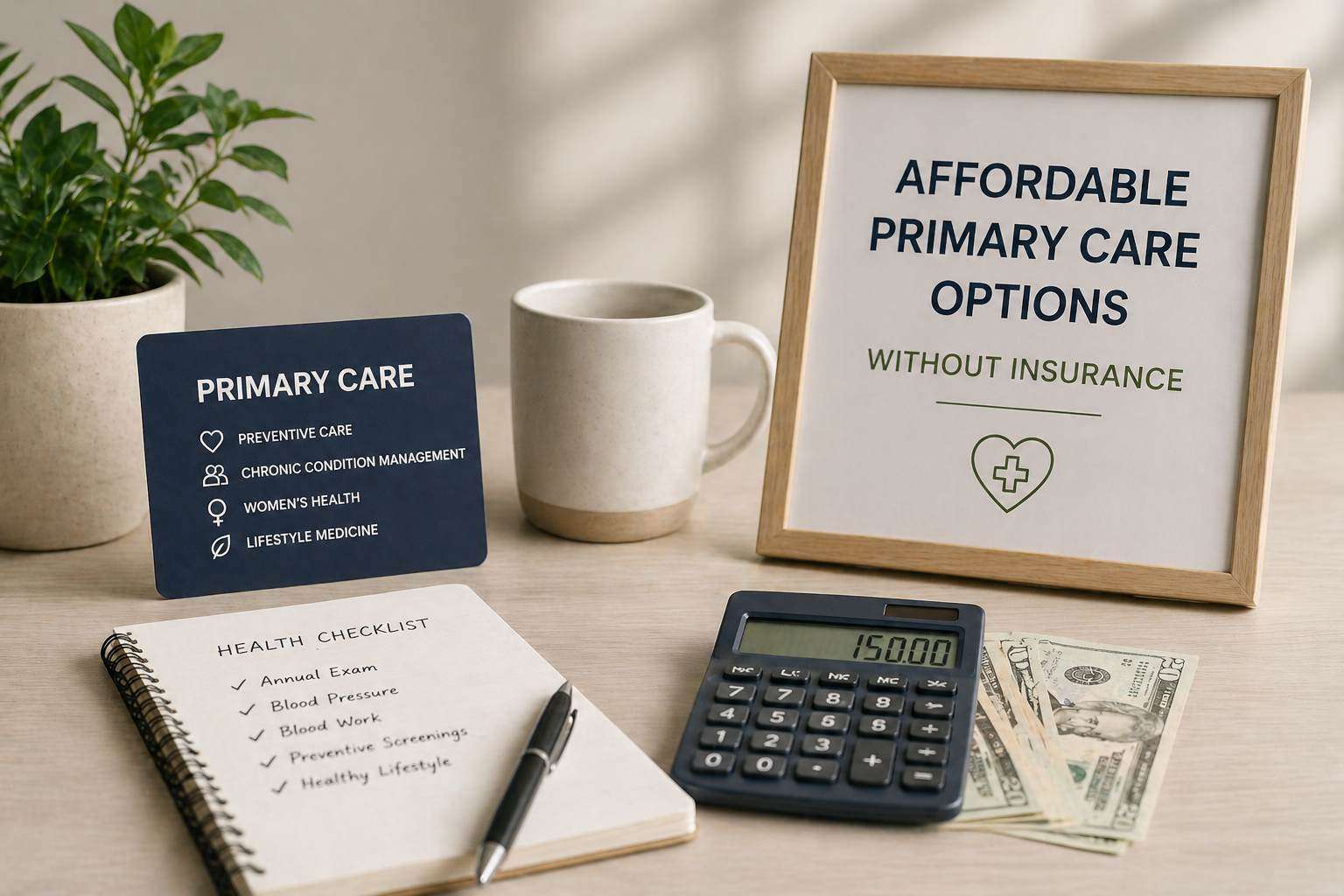
Skipping primary care when you are uninsured is understandable, since unpredictable costs create hesitation. But the pattern compounds problems. Conditions like hypertension, prediabetes, high cholesterol, and thyroid issues become far more complicated and expensive when they go undetected. The uninsured patient who avoids a $150 office visit can end up facing a $15,000 hospitalization later. Consistent access keeps manageable concerns from escalating into serious ones.
Option 1: Direct Primary Care Membership
Direct primary care is a membership model where patients pay a flat monthly fee directly to their physician, typically $50 to $150 for adults. That fee covers a wide range of primary and preventive services with no per-visit charges, no claim forms, and no surprise billing. Members get same-day or next-day appointments, can contact their physician between visits, and access labs at wholesale prices—a metabolic panel that costs $300 through a hospital might cost $15 through a DPC practice. It is best for patients needing regular care or managing ongoing concerns, though it does not cover specialists, hospitalization, or surgery.
Option 2: Federally Qualified Health Centers
Federally Qualified Health Centers (FQHCs), or community health centers, receive federal funding for uninsured and underinsured patients—more than 1,400 organizations run over 14,000 sites nationwide. They use sliding fee scales based on household income, sometimes resulting in minimal or no-cost visits, and typically offer primary care, dental, behavioral health, and pharmacy access. They are best for low-income patients, but wait times can be long, availability varies by location, and high patient volume limits continuity of care.
Option 3: Free Clinics
Free clinics are community organizations staffed largely by volunteer professionals, providing care at no cost to qualifying uninsured patients below income thresholds. Quality varies considerably depending on the organization, volunteer availability, and services offered. They genuinely serve patients with no financial resources, but limits in availability, scope, and continuity make them supplementary rather than comprehensive solutions for anyone with financial flexibility.
Option 4: Urgent Care Centers
Urgent care centers are widely accessible with shorter waits than emergency rooms, handling infections, minor injuries, rashes, and basic lab work. They work for isolated, acute needs, but cost and continuity are challenges. Visits for uninsured patients generally run $150 to $300 or more with no ongoing physician relationship. Three or four visits a year at $200 each adds up to $600 to $800 annually—excluding labs and follow-ups—making urgent care an expensive substitute for regular primary care.
Option 5: Cash-Pay Primary Care Practices
Some traditional practices offer cash-pay pricing for uninsured patients, typically $100 to $200 per visit. While more transparent than insurance billing, this does not solve continuity or accessibility. Patients still pay per visit, labs are billed separately at full retail, and practices have little incentive to keep patients healthy between visits. It suits infrequent needs in otherwise healthy patients. Sina Medical Direct Primary Care offers one-time visits for those evaluating options without a membership commitment.
How to Choose the Right Option for Your Situation
The best choice depends on how often you use care, whether you manage ongoing conditions, your need for preventive services, and your financial resources. If you see a physician two or more times a year, need regular lab monitoring, or manage a chronic condition, a DPC membership almost always delivers better value. Conditions like hypertension, diabetes, thyroid disorders, and hormonal imbalances need relationship-based monitoring that episodic care cannot replicate. Uninsured women in particular often delay screenings longest, and membership models make pap smears, exams, and menopause management financially predictable. Free clinics and FQHCs serve those with the most limited means, while even modest financial flexibility usually makes a small monthly DPC investment pay for itself.
The Role of Prevention in Reducing Long-Term Costs
Prevention is the largest source of long-term savings in healthcare. Most chronic diseases that drive spending are either preventable or significantly manageable through lifestyle intervention. Cardiovascular disease, Type 2 diabetes, obesity-related conditions, and hormonal disorders all respond meaningfully to sustained attention to nutrition, sleep, activity, and stress. Primary care grounded in lifestyle medicine does not just treat existing problems—it reduces the likelihood of needing expensive specialist care, medications, or hospitalizations. For an uninsured patient without a safety net, that preventive dimension is one of the most financially important things good primary care delivers.
Frequently Asked Questions
What is the cheapest way to see a doctor? For very low-income patients, FQHCs with sliding-scale fees or free clinics have the lowest immediate cost; for those with moderate resources who visit regularly, DPC memberships often cost less annually. Can I get prescriptions without insurance? Yes—DPC practices source common medications at wholesale prices, and manufacturer and generic programs help further. What preventive care is available? DPC memberships include routine exams, blood panels, blood pressure and diabetes screening, and women's services within the monthly fee. Is DPC worth it if I am healthy? Even healthy patients benefit from annual bloodwork, blood pressure checks, and early detection of conditions like prediabetes or thyroid dysfunction—catching issues early is almost always less costly than treating progressive illness.
Conclusion
Affordable primary care without insurance is increasingly accessible as direct primary care expands. Community health centers, free clinics, and urgent care each fill specific roles, but for most uninsured adults who need consistent, quality primary care, a monthly DPC membership remains the most comprehensive and cost-effective solution. The right choice matches your individual health needs, financial situation, and care preferences.
Have questions about direct primary care?
Talk directly with Dr. Ali — no copays, no waiting rooms, just physician-led care built around you.